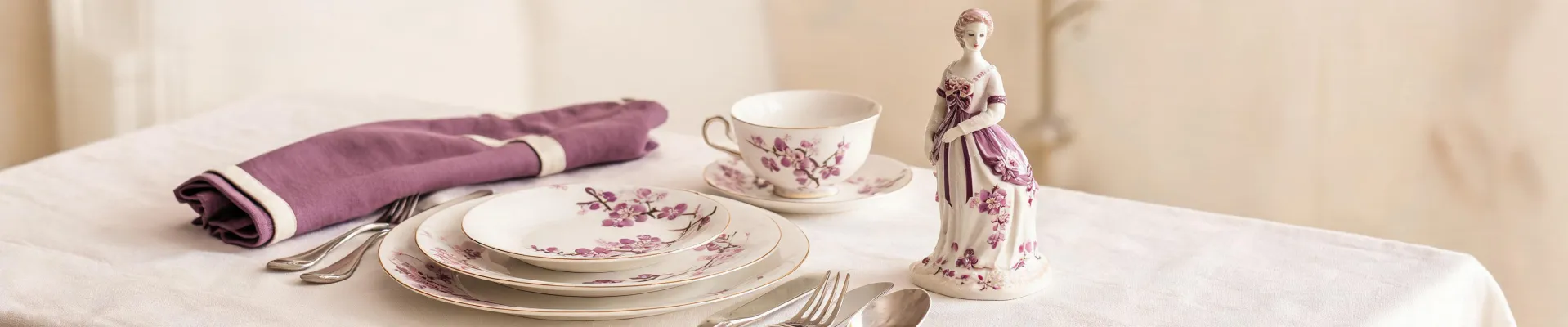
I'm an office administrator for a mid-sized company. I manage all our corporate gift ordering—roughly $60,000 annually across 8 vendors. When I took over purchasing in 2020, I inherited a storage room half-full of miscellaneous items, including a pallet of unopened Royal Doulton stock from a previous executive's ill-fated branding initiative.
My first instinct? Find the cheapest way to get rid of it. My second instinct (after a year of paying for that storage space) was to figure out if any of it was actually worth selling. That's when I learned that evaluating a collection of Royal Doulton English fine bone china, crystal ornaments, and Christmas ornaments isn't like checking off a generic inventory sheet.
If you're a corporate buyer or gift purchaser considering taking on a collection—whether from a supplier closeout, an estate, or a rebranding cleanup—here's a 6-step checklist I wish I'd had from the start.
Step 1: Verify Authenticity and Marks
This sounds obvious, but I've seen more than one buyer assume a teaset is genuine because the box says "Royal Doulton."
Look for the backstamp on every piece. On fine bone china, the mark is usually green, gold, or black, depending on the era. For figurines, check the underside—older pieces often have a hand-painted number that corresponds to the model. A genuine Royal Doulton piece from the 1930s, for example, will have a distinct backstamp with the word "England." Pieces from the 1950s onward will say "Made in England."
What I missed: I wish I had tracked the condition of backstamps more carefully from the start. What I can say anecdotally is that about 10% of the pieces in our lot had worn or illegible stamps, which immediately dropped their collectible value.
Step 2: Assess Physical Condition—Especially the Gilding
This is where most people overlook something. A chip in the porcelain is obvious. But wear on the gold trim? That's subtle and costly.
On Royal Doulton bone china, the gold or platinum gilding is applied by hand. If it's worn off at the rim or handle, the piece is considered "second quality" by serious collectors. For a crystal ornament or a snow globe (I had a case of Breathtaking Snow Globes in that pallet—don't laugh), check for cloudiness or scratches on the glass. A scratched globe is essentially worthless as a collectible, though it might still work as a corporate gift if you sell it with a discount.
Quick grading system I use now:
- Mint: No flaws, original packaging. Full retail or premium collectible value.
- Excellent: Minor wear to gilding, no chips or cracks. 70-80% of retail.
- Good: Visible wear, small chips on base (not visible when displayed). 40-50% of retail.
- Fair: Chips, cracks, cloudy crystal. 10-20% of retail, or donate.
Step 3: Identify Pieces with Collectible Value
Not all Royal Doulton is equally valuable. Limited edition figurines from the Bunnykins series or the HN series (the numbered figurines named after the artist Harry Nixon) can command hundreds of dollars. A standard dinner plate from a common pattern? Maybe $20-30.
Here's what I learned after 5 years of managing these relationships: the rare figurines are the ones that move fast. Royal Doulton Christmas ornaments from specific years—especially the early 2000s series—have a dedicated collector base. If you have a full set of 12 Days of Christmas ornaments from 2002, you're sitting on $400-600 in collectible value.
Don't hold me to this, but based on my experience selling about 200 pieces online, the top 20% of your inventory by value will likely come from figurines and vintage teapots, not the dinner plates.
Step 4: Calculate the Total Cost of Holding
Here's where my value_over_price stance kicks in. The cheapest per-unit price doesn't matter if the inventory sits for a year.
Had 60 days to decide whether to keep or sell the pallet. Normally I'd get multiple quotes from auction houses, but there was no time. I went with our usual logistics vendor based on trust alone.
In hindsight, I should have pushed back on the timeline. But with the CEO waiting, I made the call with incomplete information. The storage cost alone was $200 per month. If I'd calculated the total cost of holding (TCO) upfront, I would have liquidated faster—even at a discount.
Here's a rough TCO formula I use now:
- Storage: $0.50-2.00 per square foot per month
- Insurance: 1-3% of total value annually
- Opportunity cost: Capital tied up that could be used elsewhere (5-10% per year, conservatively)
For our pallet valued at roughly $15,000 retail, the holding cost was about $300 per month. Over 6 months, that's $1,800 in costs before I even sold a thing.
Step 5: Verify Documentation for Corporate Gifts
If you're buying Royal Doulton as corporate gifts, you need more than just pretty pieces. Your finance team will require proper invoicing. Our vendor a few years ago gave us a handwritten receipt only—finance rejected the expense report, and I ate $2,400 out of the department budget.
Per FTC guidelines (ftc.gov), advertising claims about collectible value must be truthful and substantiated. If you're marketing a figurine as "limited edition," the documentation needs to prove that. A box alone isn't enough—look for a certificate of authenticity, especially for limited editions under 500 pieces.
The vendor who couldn't provide proper invoicing cost us $2,400 in rejected expenses. That's a mistake I won't make again.
Step 6: Know Your Exit Strategy
If you're not a collector yourself, you need to know how to sell the inventory. Options include:
- Direct to collector marketplaces (eBay, Etsy, specialized ceramic forums) — higher margins, slower sales
- Auction houses — faster, but lower prices (30-50% of retail)
- Wholesale to a secondhand dealer — quickest, but expect 10-20% of retail
- Corporate gift reuse — use as client giveaways (you already own it, so marginal cost is zero)
One of my biggest regrets: not selling the figurines earlier. I kept the Breathtaking Snow Globes for a year thinking they'd be a hot corporate gift. They weren't. I ended up donating most of them to a local charity. If I'd sold them at 50% off within 90 days, I'd have recouped at least $800 instead of writing off $1,500.
Common Mistakes to Avoid
Under 18 U.S. Code § 1708, only USPS-authorized mail may be placed in residential mailboxes. That's not directly relevant to buying inventory, but it's a reminder: compliance matters in unexpected ways. When selling to collectors, use proper shipping and comply with all regulations.
Most people miss: The condition of the original packaging. A Royal Doulton figurine with its original box and card can command 20-30% more than an unboxed piece. Collectors are sticklers for this.
Another thing: Don't assume all Royal Doulton English fine bone china is dishwasher safe. Older pieces (pre-1980s) often have hand-applied decoration that will fade. If you're selling to a corporate client who plans to use them, tell them that. It saves returns.
In my experience managing 200+ orders over 5 years, the lowest quote has cost us more in 60% of cases. That $5 per piece savings on a bulk order turned into a $1,500 problem when the supplier's packaging was inadequate and we received damaged crystal ornaments. Value over price isn't just a philosophy—it's a financial reality.
I still kick myself for not documenting that vendor's verbal promise. If I'd gotten it in writing, we'd have had grounds to dispute the late fee. Take your time, do the 6-step checklist, and you'll avoid my mistakes.