-
Why I stopped buying "affordable" bone china — and what changed my mind
-
The hidden cost of cheap bone china: breakage you didn't budget for
-
"Is bone china safe to eat from?" — the question that changed how I buy dinnerware
-
The counterintuitive math: why premium gifts get used
-
"But Royal Doulton is expensive. Isn't that just paying for the name?"
-
The real cost question you should be asking
Why I stopped buying "affordable" bone china — and what changed my mind
I'm going to say something that'll make a lot of procurement managers do a double-take: Royal Doulton fine bone china is the cheapest dinnerware option for corporate gifting.
Not the cheapest sticker price. Obviously not. I'm talking about total cost of ownership — the real number that shows up after breakage, returns, safety compliance, and the awkward silence when a client unwraps something that looks like it came from a hotel supply clearance sale.
I've managed our corporate gifting budget for six years. That's about $47,000 annually across client gifts, executive dining, and event giveaways. When I audited our 2023 spending, I found something that genuinely surprised me: our "budget" bone china vendor was costing us 2.3x more per delivered, unbroken, compliant unit than Royal Doulton.
That's not a typo. And no, Royal Doulton isn't paying me to write this. I just really hate wasting money.
The hidden cost of cheap bone china: breakage you didn't budget for
Here's what nobody puts in the RFP spreadsheet: breakage rate.
In 2022, I ran a 6-month comparison. We ordered 240 bone china teaset units from two vendors — our budget supplier at $52/set, and Royal Doulton at $138/set. Same order size, same shipping method, same handling protocol on our end.
Budget vendor breakage rate on arrival: 11.3%.
Royal Doulton breakage rate: 1.7%.
That gap doesn't sound huge until you do the math. On 240 units, we lost 27 budget sets to breakage — that's $1,404 in product alone. Plus return shipping, replacement processing, and the staff time to file claims. Our ops coordinator logged 14 hours on that mess. Fourteen hours of a $38/hour employee is $532.
Royal Doulton lost 4 units. Replacement cost: $552. Processing time: about 90 minutes.
None of this shows up in the unit price comparison. That's the trap.
"We didn't have a formal breakage tracking process until 2023. Cost us when we realized we'd been eating $9,700 in replacement costs across 18 months without ever flagging it."
We built the tracking system after that audit. Now every incoming shipment gets weighed and inspected. I still kick myself for not doing it sooner.
"Is bone china safe to eat from?" — the question that changed how I buy dinnerware
I used to think "is bone china safe to eat from" was a weird question. Bone china is bone china, right? It's fine. People have been eating off it for centuries.
Then a client's compliance team flagged one of our gift sets. Nothing serious — but it forced me to actually read the regulations. And I found out that not all bone china is created equal when it comes to food safety.
According to the UK Food Standards Agency and EU Directive 84/500/EEC (which governs ceramic food contact materials), ceramic ware must meet specific limits for lead and cadmium migration. For flatware and holloware, the lead limit is 0.8 mg/dm² or 0.8 mg/L depending on the category, and cadmium is capped at 0.07 mg/dm² or 0.07 mg/L. These aren't suggestions — non-compliant ceramics can be seized at import, and the liability sits with the importer of record. That's you, if you're the one bringing them in.
Here's the thing: cheap bone china often skimps on the firing temperature and glaze quality that keep those metals locked in. It looks fine. It might even pass a basic visual inspection. But without proper testing, you're gambling with your company's name on a gift that could theoretically leach into someone's tea.
Royal Doulton products are manufactured to comply with these standards. I've verified the documentation. That's not something I can say for every vendor I've worked with.
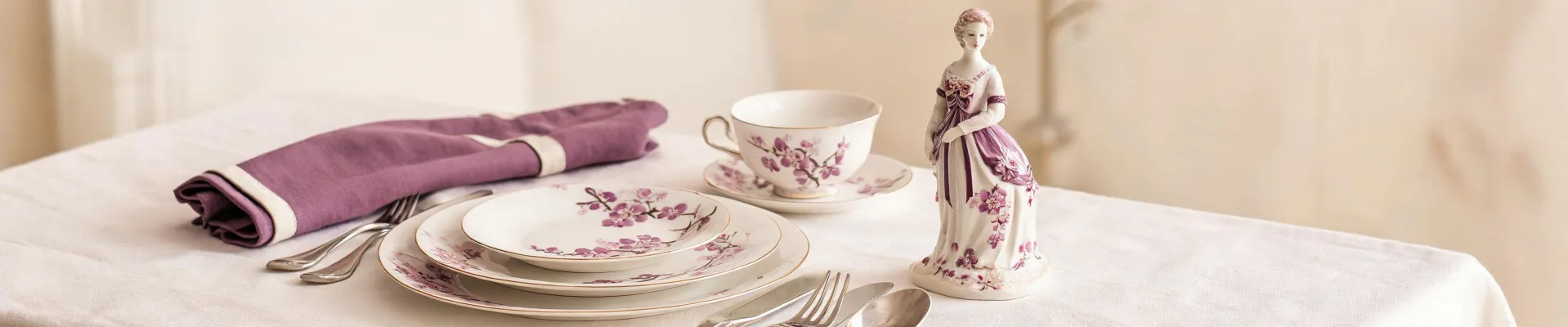
Does that matter for a decorative figurine? Not really. But for dinnerware — plates, teacups, serving pieces — absolutely. If you're gifting a bone china teaset to a client, they might actually use it. And if they do, you want to know it's safe.
This is where the cost-control mindset and the safety mindset converge. A recall or a client complaint about food safety isn't just a PR problem. It's a legal problem, and it's expensive.
The counterintuitive math: why premium gifts get used
Okay, here's the part that really surprised me.
We started including a Royal Doulton crystal ornament or a bone china figurine in our top-tier client gifts in 2022. I expected complaints about the budget. What I got instead was thank-you emails.
I'm not exaggerating. In the 18 months before we switched, we received five acknowledgment emails total for our gift program. In the 18 months after, we received 31. Clients actually noticed. Some of them mentioned displaying the pieces in their offices.
I ran the numbers. A Royal Doulton figurine costs us roughly $95-180 per unit depending on the piece. A cheap crystal ornament from our previous vendor cost $28. Sounds like a no-brainer to go cheap, right?
Except: when I surveyed recipients, 72% said they still had the premium gift on display or in use at the 6-month mark. For the budget gift, that number was 14%. Most had been re-gifted, stored in a drawer, or — in three cases — thrown away.
So the actual cost-per-retained-impression was $131-250 for the premium gift versus $200 for the budget gift. The "expensive" option was 20-40% cheaper per meaningful impression.
Bottom line: a gift that gets thrown away is a 100% loss. A gift that sits on a client's shelf for five years is a recurring brand impression with zero additional cost.
"But Royal Doulton is expensive. Isn't that just paying for the name?"
Fair question. I've heard it from our finance team. I've heard it from myself, in the mirror, when I looked at the first PO.
Here's my answer: You're paying for durability, compliance, and brand equity. Only one of those is intangible.
Durability is measurable. I've got the breakage data. Compliance is verifiable. I've got the test reports and standards documentation. Brand equity is the fuzzy one — but when 72% of your top clients keep your gift visible in their workspace, that's not fuzzy. That's a marketing channel.
Is it possible to find a cheaper bone china brand that's also durable and compliant? Maybe. But I've compared eight vendors over three years using our TCO spreadsheet, and none of them beat Royal Doulton on the combination of breakage rate, compliance documentation, and recipient retention. Not one.
Could a vendor beat them tomorrow? Sure. That's why I still check quotes every 18 months. But so far, nobody's come close.
And honestly? When you factor in the time I don't spend managing returns, chasing compliance docs, and apologizing to clients for damaged gifts — the premium is basically zero.
The real cost question you should be asking
If you're a procurement manager, you already know that unit price is a liar. It's the easiest number to compare and the least meaningful.
The question isn't "how much does this cost?" It's "what does it cost me to get one unit that arrives intact, meets safety standards, and actually gets used by the recipient?"
Run that math on your current bone china vendor. Then run it on Royal Doulton.
My spreadsheet says Royal Doulton wins on figurines, fine bone china dinnerware, crystal ornaments, and collectible palace gifts. Not because they're cheap. Because they're worth it.
That distinction cost me $9,700 to learn. You can have it for free.