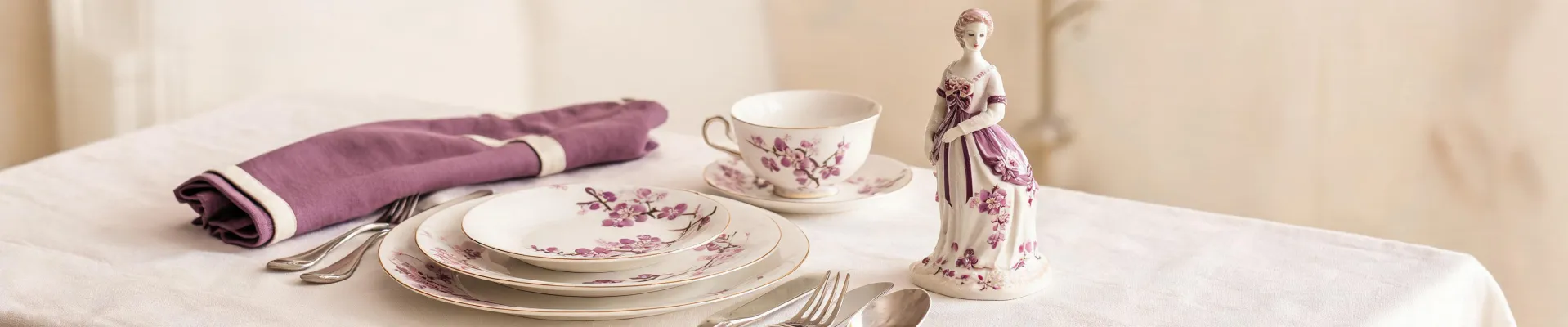
There are a few ways to spend $300 on Royal Doulton. I've tried most of them. Some ended with a gorgeous bone china teaset on my shelf. Others ended with a cracked angel figurine in a drawer and a lesson I didn't enjoy paying for.
Here's the thing nobody tells you: there is no single 'best' Royal Doulton piece. The right purchase depends on your scenario. Collector, gift buyer, or corporate purchaser—those are different jobs. Use the wrong checklist, and you'll overpay or regret it.
I've been buying and cataloging Royal Doulton for 12 years. In that time, I've personally made and documented 23 significant buying mistakes. That's roughly $4,700 in wasted budget. This guide is the one I wish I'd had before the first mistake.
Three Buying Scenarios, Three Different Rules
Before you search for 'Royal Doulton limited edition figurines' or compare bone china prices, ask yourself why you're buying.
- If you're buying a piece for your own collection, you're a collector.
- If you're buying a gift, you're a gift buyer.
- If you're buying for a company event or client list, you're a corporate purchaser.
The same product can be a smart purchase in one scenario and a terrible one in another. Example: a Royal Doulton crystal ornament with a tiny hairline crack is almost worthless to a collector. But if it's a gift for a friend who will keep it on a windowsill, the crack might never matter. Context is the whole game.
Scenario 1 — You're Buying Royal Doulton Limited Edition Figurines for a Collection
Limited edition figurines are the reason most people start looking at Royal Doulton. They're also the easiest category to get wrong.
The first thing to check is the backstamp. Not the name plastered on the front. The bottom. The backstamp tells you the pattern name, the year of production, and—for limited editions—the number in the series. If that mark is worn, unclear, or missing, the figurine loses a big part of its value. It might still be lovely, but it's not the same item.
Here's something dealers won't tell you: the original box and certificate are worth real money in the secondary market. I've seen two identical Royal Doulton angel figurines sell for a 25% price gap, simply because one had the certificate and the other didn't. If a listing says 'figurine only,' factor that into your offer.
And don't assume 'mint' means flawless, because 'mint condition' in online listings can mean anything from 'never played with' to 'looks fine from three feet away.' Ask for a photo of the actual item, not the stock image. Ask about chips, hairlines, restoration, or re-gilding. If the seller hesitates, that's an answer.
Federal guidelines actually back you up here. Per FTC rules (ftc.gov), advertising claims like 'limited edition' have to be truthful and substantiated. A seller who can't show the edition size or a clear backstamp is waving a red flag. It doesn't mean it's a fake, but it means your verification checklist just grew.
Check the backstamp. Every time.
I once bought a 'rare' figurine because the price was too tempting. I checked the crown, the paint, the base. I forgot the bottom. It had been ground down to remove the backstamp—probably a factory second. That was a $320 lesson. The worst part? I told myself backstamps were a detail for 'serious' collectors. They are. I wasn't as serious as I thought.
Scenario 2 — You're Buying Bone China Royal Doulton, Crystal Ornaments, or Angel Figurines as a Gift
Let me be blunt: gift purchases are harder than collector purchases. With a collection, you know what you want. With a gift, you're buying for someone else's taste, memory, and expectations.
If you're buying a bone china Royal Doulton teaset, it's likely for one of those momentous occasions: a wedding, an anniversary, a big retirement. These pieces are meant to be used. So ask yourself: does this teaset look fragile, or is it durable enough for actual tea? Some Royal Doulton bone china is delicate by design; it's for display, not the dishwasher. If the recipient is the kind of person who will actually use it, choose a pattern with a bit more visual tolerance. Fancy doesn't equal practical.
Crystal ornaments are a different story. They're less about function and more about catching the light. If you're picking a crystal ornament as a gift, my advice is to choose based on the recipient's own story, not on what's trending. A Christmas angel figurine is a beautiful gesture; an angel figurine that matches a memory—a place they lived, a bird they loved, a hobby they had—is unforgettable.
A practical note: when buying online, don't settle for the stock product photo. The actual piece might have a firing mark, a slight tilt, or a bubble in the glaze. For a gift, those imperfections matter more than they should. Request a real photo or buy in person if you can.
I have mixed feelings about buying Royal Doulton from resale platforms. On one hand, I've found discontinued crystal ornaments for less than half of suggested retail. On the other, I've had a 'gift quality' ornament arrive in a repackaged box with a scratched base. Part of me wants to say 'buy from the official Royal Doulton site and be done.' Another part knows that collectors and small sellers can have better prices and better stock. My compromise: check the return policy before you check the price.
Scenario 3 — You're Buying Royal Doulton for Corporate Gifts or Bulk Orders
If you're ordering multiple items—say, forty crystal ornaments for client gifts or a set of bone china place settings for a company event—the rules change again.
First, confirm that you're dealing with an authorized distributor. Marketplace sellers can have great prices, but with bulk orders you need batch consistency. I've seen a run of Royal Doulton figurines where the glaze tone varied noticeably from piece to piece. For a single collector, that's no big deal. For an executive gift, it looks cheap.
Second, ask for a written condition policy. Not a return policy—a condition policy. What happens if three of the fifty ornament boxes arrive with crushed corners? What if the teaset's lid is cracked in transit? Vendors with clear answers to these questions are worth every extra dollar they charge.
Third, get an itemized quote. This is where I sound like a broken record, but I have a reason. The 'attractive' bulk price can hide packaging fees, handling fees, and shipping insurance. The vendor who lists everything upfront might look more expensive at first. In my experience, that vendor is usually the cheaper one when the final invoice arrives.
It's tempting to think that more units automatically mean a better deal. That's the oversimplification I keep seeing in corporate purchasing. The truth is that mixed sets, single-piece packaging, and careful gift wrapping all cost money. Understand your actual requirement before you ask for a volume discount.
A Short Detour for Anyone Who Googled 'What Are the Wax Blocks for in Diamond Painting?'
You might have landed here after asking a completely different craft question: what are the wax blocks for in diamond painting?
The answer is simple. The wax block is the small, usually pink block that you touch with the tip of your applicator pen before picking up a tiny resin diamond. The wax sticks to the pen tip, the diamond sticks to the wax, and you place the diamond on the adhesive canvas. Repeat thousands of times. That's all it does. It's not glue. It's not a replacement part. It's not edible, by the way.
Why am I mentioning this in a Royal Doulton guide? Because it's a perfect example of the same mindset problem. The wax block is small. The backstamp on a Royal Doulton figurine is small. Ignore either one, and the result is frustration, wasted money, or both.
If you're here for the diamond painting answer and not the porcelain, I hope that helps. If you need a gift for someone who does diamond painting, a Royal Doulton crystal ornament might be a decent change of pace. At least it won't scatter tiny plastic drills across your living room floor.
How to Tell Which Scenario You're In
Still not sure? Here's the decision path I use, and it takes about thirty seconds.
Ask yourself three questions.
First: who will live with this piece? If it's you, you're a collector—scenario one. If it's someone else, you're a gift buyer—scenario two.
Second: whose money is it? If you're spending your own money, collector or gift rules apply. If you're signing a purchase order for a company, you're in scenario three, even if the gift is for someone else.
Third: what happens if there's a small flaw? For a collector, a small flaw in a limited edition figurine is a permanent blemish on the collection. For a gift buyer, a small flaw might be invisible—unless the recipient is the kind of person who sees every detail. For a corporate purchase, the flaw becomes a return, a credit note, or an uncomfortable conversation with the boss.
If you're still unsure, default to scenario two's checklist. Gifts are the hardest category because you're not the one who'll live with the result. Treat the purchase with that extra layer of paranoia. It's cheaper than the alternative.
The Checklist I Use Now
After the $320 backstamp mistake, the cracked teapot lid, and the crystal ornament that arrived looking like it had been used as a hockey puck, I finally built a list.
- Photograph of the actual item (not a stock photo).
- Clear backstamp photo—bottom of the piece, in focus.
- Edition size and number, if applicable.
- Presence of original box and certificate.
- Written condition notes: chips, hairlines, restoration, re-gilding.
- Itemized quote: item, packaging, shipping, insurance.
- Written return or condition policy for damaged items.
That list cost me $4,700 and a few embarrassing phone calls. You're welcome to use it for free.
There is no perfect Royal Doulton piece. There is only the right piece for your scenario—and the discipline to check the details before you pay.
That's it. Simple.