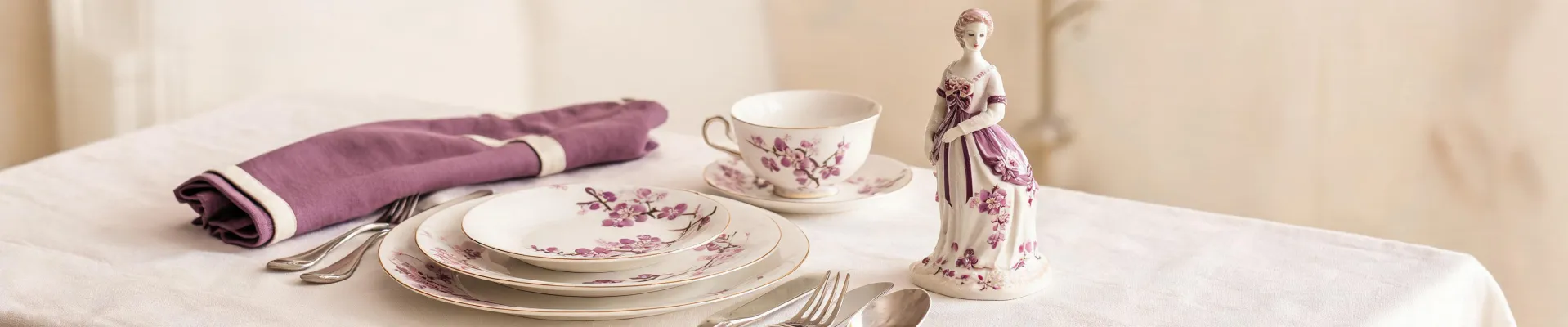
Buying Royal Doulton isn't hard. Buying without overpaying, breaking pieces, or shipping them wrong is where I have the battle scars. In 11 years as a corporate gift buyer, I've documented 14 significant Royal Doulton mistakes - $4,700 in wasted budget, if you want a number. The most expensive was a Santa figurine I paid $1,850 for because I trusted a price guide and skipped completed auctions. It sold later for $700. Now I have a 15-minute checklist that has saved me an estimated $8,000 in avoidable waste. The lesson isn't 'do more research.' It's 'use the right research, then verify before you commit.'
Before you ask: no, I'm not a Royal Doulton appraiser. I'm a buyer who has handled Royal Doulton gifts, figurines, tableware, vases, and crystal for corporate clients since 2014. I keep a mistake log (yes, a spreadsheet titled 'Dumb Stuff'). The insights below come from about 200 orders, and I've learned more from the failures than from the successes. My experience is with corporate gifting and sourcing, not museum-level collecting. If you're after the rarest of rare HN figurines, some of what I say may not apply.
One thing I refuse to do is promise that any Royal Doulton figurine will appreciate in value. If a dealer says this will be worth double in five years, keep your hand on your wallet. The FTC requires claims to be truthful and substantiated (Source: FTC Business Guidance, ftc.gov). That's a legal floor, not a sales objection.
The Santa Figurine Trap
Royal Doulton Santa figurines have a devoted following, but that doesn't mean every piece is worth chasing. In 2019, I bought a Royal Doulton Santa figurine from a local antiques dealer. I was sure it was a bargain because the tag said retired. What I missed is that retired just means 'we don't make it anymore.' It doesn't mean rare. There were thousands made. I later found three sold listings for the same piece at about $250 while I was asking $450. (I still get annoyed thinking about this.)
The correct question for any Royal Doulton Santa figurine is: What did the last ten actually sell for, not what is someone asking? Price guides and old auction catalogs can offer context, but real market value moves in completed listings, condition, and whether the original box and paperwork are present.
Specific to Santa figurines: the older ones can be more detailed, and collectors often focus on certain periods. But condition dominates. A rare Santa with a re-painted nose is worth less than a more common one with the original factory glaze. That's counterintuitive - rare part does not redeem damaged part. I learned this when a 'great deal' figurine came back from restoration with a collector discount larger than the discount I'd gotten on the purchase.
Royal Doulton Figurines Values: What Actually Moves Them
My worst mistake in this area happened in September 2022. I found a Royal Doulton figurine with a price tag that seemed far below its 'book' value. The book was from 2016, but I assumed the market had held. It hadn't. I paid $500; the client later asked to return it, and I resold it for $225. The problem wasn't my negotiating - it was my source of truth.
Royal Doulton figurines values depend on three things I now check with every piece:
- Actual sale records from the last 12 months - not the list price.
- Physical condition over catalogue rarity. A hairline crack on the base does more damage than an edition size helps.
- The backstamp and HN number (the catalog code on the base). Two figurines that look identical can have different values depending on the mark and production period.
Please ignore the investment narrative. I have not found a pattern where Royal Doulton figurines reliably outperform a boring index fund. If you buy them, buy them because you appreciate the craftsmanship. If they appreciate, treat it as a happy accident, not a financial plan. (Sorry, but that's the honest data from my order book.)
Shipping Figurines and Crystal Suncatchers: The Shattered Prism Incident
Let's switch to a mistake I could have prevented with a simple checklist.
In March 2023, I shipped 24 Royal Doulton figurines and 18 crystal suncatchers to a client. I packed the figurines individually in bubble wrap, but I put several crystal suncatchers together in one bag because they seemed durable. They were not. The box arrived with glittering glass dust and one snapped prism. That was a $230 loss, including the rush replacement shipping. (Note to self: never combine crystal in one layer of padding.) I almost never ship a crystal suncatcher now without its own sleeve and a bubble-padded compartment.
The USPS has clear shipping guidance: for insurance claims, you need to show the original value, and packaging matters. According to USPS (usps.com), items should be cushioned so they don't shift, and the package should survive basic handling. That sounds obvious, but I once thought double box meant putting one box in another. It doesn't work if the inner box has no shock absorption. Use at least 2 inches of crush-absorbing material on every side.
Dodged a bullet: a few months ago, I almost shipped a single $300 figurine in a reused flat-rate box. Then I remembered the broken suncatcher and spent $8 on a proper box with foam inserts. The figurine arrived fine. The $8 felt like a bargain.
The Hydrangea-in-a-Vase Question That Made Me Look Foolish
This one is not about porcelain, but it is related to my job because I also sell Royal Doulton vases. A client asked me how to revive hydrangeas in a vase, and I gave the standard recut-the-stem advice. It didn't work. I went back and tested it myself, because if I'm going to look foolish, at least I'll learn something.
Hydrangeas are not roses. They drink through their petals, not just their stems. If you're searching for how to revive hydrangeas in vase arrangements, the answer starts with the petals. Here's the method that finally worked:
- Submerge the whole flower head in room-temperature water for 30 to 45 minutes.
- Recut the stem at a sharp angle under water.
- Put them in a vase with fresh water and mist the petals daily.
The counterintuitive part: adding more water to the vase won't revive a wilted hydrangea if the petals are dehydrated. The water needs to reach the petals. And don't use boiling water from a kettle - I did that in the same experiment and cooked the stems. The flowers looked worse. The vase, a crystal one, survived.
If you're displaying hydrangeas in a fine bone china vase or crystal vase, change the water every day or two. Flower stems release bacteria that cloud crystal and can leave rings in ceramics. That's the maintenance blunder that causes more damage than any chip.
The Checklist I Created After Mistake Number 14
After mistake number 14 (a wrong-sized gift order that I approved incorrectly), I formalized the process. Here it is, if you want to steal it:
- Search the exact piece name and HN number on completed auction listings, not just active listings.
- Screenshot the listing and note the date. Prices are not permanent.
- Check condition photos against a figurine checklist: chips, cracks, hairlines, crazing, touch-ups, original box.
- Confirm the backstamp and production period. If in doubt, send a photo to a restorer who works with Royal Doulton.
- For shipping, use a box at least 2 inches larger than the item on every side, with padding that doesn't let the item move.
- If the item is over $100, insure it and keep proof of value.
- When gifting, include care instructions. Especially for fresh flowers - don't assume the recipient knows.
5 minutes of verification beats 5 days of correction. That sounds like a slogan, but it's the cheapest line on my spreadsheet.
When This Checklist Does Not Apply
My mistake log is based on corporate orders, not private collection buying. If you're buying a $25 Royal Doulton bud vase at a flea market, this checklist is overkill. You don't need completed sales data for a birthday gift under $50. The stakes are lower - unless it arrives broken.
I have deliberately not compared Royal Doulton to other ceramic brands. There are good reasons to own several, and I can only speak to the brand I've spent a decade sourcing.
The biggest boundary is expectation: don't expect every piece to gain value. I've said it before. The pieces I bought because I genuinely liked them have brought me more long-term satisfaction than the ones I bought to flip. That's the one rule I would add to any checklist.