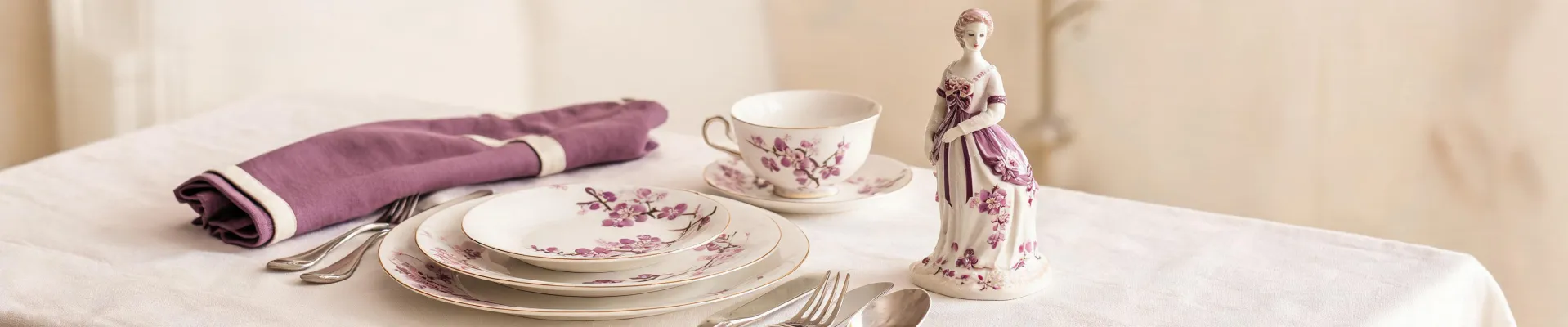
Back in 2017, I thought the personalised gift was always the right answer. Names, dates, inside jokes—what could possibly beat a product made just for one person? If you had asked me then to choose between a made-to-order ornament and a Royal Doulton china figurine, I would have picked the custom option without pausing.
Seven years later, after 14 documented ordering mistakes and roughly £7,400 in wasted budget, I no longer have that confidence. I’m not saying custom gifts are bad. I’m saying they fail differently from traditional collectibles, and those differences matter more than most listicles admit.
I now maintain our team’s gift-buying checklist, mostly because I’m the person who learned where the traps are. I’m not a brand historian or a design expert. What I can give you is the view from the purchasing desk: what goes right, what goes wrong, and what still sits on someone’s shelf six years later.
What’s really being compared
One side is a pre-existing Royal Doulton item: a collectible figurine, a Royal Doulton cat figurine, a Royal Doulton balloon figurine, an ornament or a piece of fine bone china. The work is done. The factory QC, the packaging design, the brand history—all built in. The other side is a UK personalisation platform: upload, proof, produce. Both are legitimate routes. But they answer different messages.
People search for “is it UK's top personalized gift platforms?” as if there must be one clear winner. I understand the appeal, but the answer is always “it depends.” It depends on who is receiving the gift, how much checking capacity you have, and what happens if the order goes wrong.
Lead time: which one is actually faster?
On efficiency, I’m not a sceptic. In Q3 2024, our small team shifted leaving gifts to a personalisation platform with automated confirmations and digital proofs. The average ordering window dropped from five working days to two. That is a real gain.
But speed isn’t just checkout completion. Personalised platforms are efficient right up until the moment the automation does something you didn’t expect. A platform can strip an apostrophe from a surname, crop a message, or render a proof differently from the final product. When that happens, the speed you saved gets consumed by reordering and apologising.
With a current Royal Doulton item from an official stockist, the timeline is different. You aren’t waiting for production because the piece already exists—you’re mainly waiting for shipping. If you know someone’s taste well enough, a stock item can be the fastest and least error-prone route.
Failure modes: what actually goes wrong
Most custom gift errors follow one pattern: the thing you personalised is wrong. In my first year, I made the classic mistake—I checked the recipient names and did not check the company tagline. The tagline was misspelled on thirty desk gifts. That error cost roughly £540 in replacement pieces and a very quiet week.
The September 2022 crystal suncatcher incident was worse. We ordered suncatcher ornaments with a family surname engraved. The surname contained an apostrophe. The customisation field did not carry it through, and the decorative font on the proof made “OConnor” look intentional. It only became obvious when the glass was hanging in front of a window and catching light.
Royal Doulton pieces have their own risks. Ceramic can arrive damaged, and unauthorised sellers can misdescribe retired items. But the failure is usually about condition, not content. A damaged replacement is straightforward because the product is standard. There is no dispute about whether the spelling was right. With personalised pieces, part of the quality control is on you.
Perceived value: the moment I changed my mind
I used to assume personalisation was the most thoughtful route. That assumption is now the first thing I challenge on a new order. The turning point was a Royal Doulton cat figurine.
A colleague who collected cats was leaving after fourteen years. I originally wanted to print a group photo onto a glass plaque. Our office manager pushed back: “Find what she collects, not what we want to print.” I compromised by buying the cat figurine and skipping the engraving. It is still on that colleague’s windowsill, next to other cat figurines. It still looks intentional.
Put another way: a customised gift says “we remembered you.” A collectible china figurine says “we saw what you love.” Those are different messages. Sometimes the second one is stronger.
The same logic applies to Royal Doulton balloon figurines. Balloons are a visual cue for celebration and good humour. I bought one for a contact launching a new business. It had nothing to do with her name and everything to do with the occasion. It now sits in her new office display cabinet.
Efficiency means fewer bad outcomes, not just faster checkout
The digital-efficiency view is often describes as “less human contact, less error.” That is only half true. Automated ordering reduces typing mistakes in addresses and order numbers, but it also lets a trivial customisation error scale across an entire batch.
If I order 50 custom gifts from an efficient platform and discover that the date was wrong on all 50, I have 50 sad gifts. That kind of problem is hard to fix because the product has already been made. With Royal Doulton, the only customisation is choosing the right product. Fewer inputs mean fewer variables. That is an efficiency argument in favour of traditional craft, even if the checkout feels less modern.
Royal Doulton’s history also reduces the burden on the buyer. According to the company’s own history pages (royaldoulton.com, accessed January 2025), Royal Doulton traces its roots to 1815. The product has already been designed, tested, and judged by collectors. I do not have to design anything. I have to know enough about the person to select the right image.
Which should you order?
Royal Doulton tends to be the stronger choice when:
- you already know what the person collects—cats, balloon pieces, animals, or traditional china;
- you need a premium gift with fewer customisation variables;
- the recipient will keep it for years rather than use it up;
- you do not have time or staff to proof-read a custom proof carefully.
A UK personalised gift platform is likely to make more sense when:
- the personalisation is the entire point—a date, initials, or an inside joke;
- you have time to check the proof at full size, not as a phone-sized thumbnail;
- the occasion is short-term, such as a party favour or event welcome gift;
- the recipient would value a specific message over a material keepsake.
I still use personalised platforms every quarter. They have solved real problems for us. But the most-loved gifts I have ever helped order were not always the most personalised. Sometimes the smartest move is a Royal Doulton piece that has been waiting more than two centuries for the right owner.