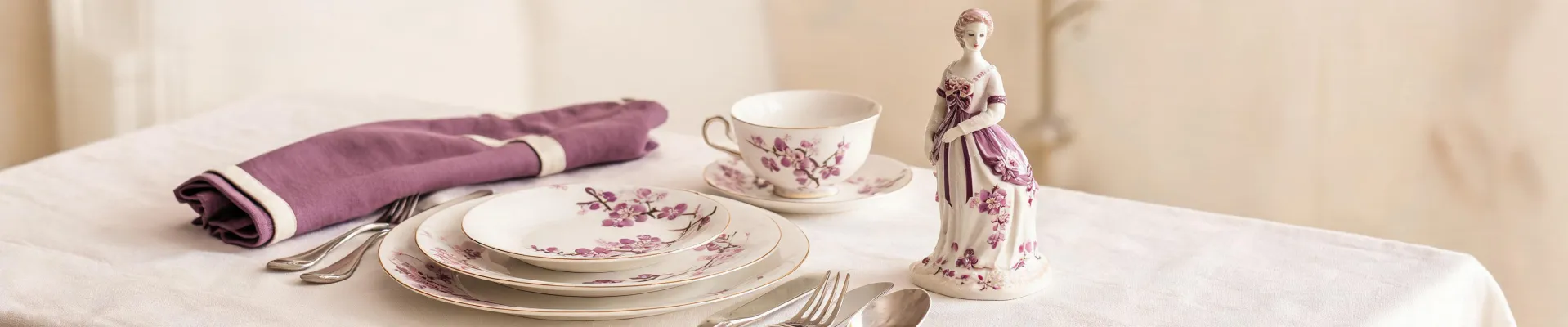
If you're sourcing Royal Doulton pieces for corporate gifts or collections, you already know the basics: check the backstamp, verify condition, compare prices. I knew all that too — before I wasted about $3,200 on what looked like a perfect lot of Peter Rabbit figurines. Turned out they were first-quality seconds with a barely visible glaze defect. The seller’s photos hid it perfectly. The refund policy? 'Final sale on clearance items.'
That was in 2019. Since then, I've personally handled over 400 orders for corporate buyers, and I've built a checklist that catches problems before they become expensive lessons. Here's what I wish someone had given me on day one.
Who This Checklist Is For
This is for anyone buying multiple Royal Doulton items — figurines, dinnerware sets, vases, decorative plates — for business purposes. Maybe it's a client appreciation program, a corporate collectible investment, or branded gifts for a trade show. If you're spending more than $500 in one order, this list will save you from the three most common errors I've seen (and made): condition misjudgment, edition size confusion, and hidden cost surprises.
Four steps. Follow them in order. Skip none.
Step 1: Verify the Backstamp — But Not Just Any Backstamp
Most people look for the Royal Doulton mark. Fine. But there are at least seven different backstamp variations used between 1901 and 2002, and each tells you something different about the piece's era and production batch. A 'Royal Doulton England' mark with a crown from the 1930s isn't the same as the post-1960s 'Royal Doulton Made in England' stamp.
What I missed on that first Peter Rabbit order: the backstamp had a tiny 'First Quality' ink stamp overwritten by a red 'Second' mark — but the second mark was almost rubbed off. The photos didn't show it. If I'd asked for a close-up of the underside, I'd have seen it.
Checklist action: Ask for three photos of the backstamp: one straight-on, one with side lighting (to catch faint stamps), and one showing the entire base for any extra marks. For pre-1920 pieces, also look for the 'ROYAL DOULTON' wordmark without the 'England' — that's a different valuation category.
Step 2: Map the Edition Spectrum — Limited, Rare, or Just Old?
Here's where corporate buyers get tripped up most. 'Limited edition' and 'very rare' sound impressive, but they aren't the same thing. Let me break it down the way I explain to my team:
- Limited edition (LE): Numbered production run, typically 500–5,000 pieces. Royal Doulton's HN series script figurines are often LEs. You can verify the edition size on the Royal Doulton Collectors' Club archives (as of 2024, they still maintain public records).
- Rare: Not necessarily numbered, but low surviving count. A figurine produced only for one year in the 1950s might be rare even if the original run was 10,000. Condition determines value.
- Very rare (their phrasing): Usually refers to prototypes, samples, or pieces from discontinued lines with fewer than 100 known examples. If a seller uses 'very rare' without a backstory, I'm skeptical.
In 2022, I nearly bought a set of 'very rare Royal Doulton figurines' for a client's boardroom display. The seller's description was convincing. I asked for the HN numbers (model codes). They couldn't provide them. Turned out the pieces were standard HN 2158 reproductions from the 1970s — collectible, but not 'very rare.' The price difference? About $1,800. I caught it because I checked the HN database.
Checklist action: For each piece, request the HN number (for figurines) or pattern number (for dinnerware). Cross-reference with an official Royal Doulton reference guide (I use the 2023 edition of 'Royal Doulton Figurines: A Collector's Handbook'). If the seller can't provide the HN number within 24 hours, that's a red flag.
Step 3: Calculate the True Total — Not Just the Price Tag
Transparent pricing matters more than a low upfront number. I've learned to ask 'what's NOT included' before 'what's the price.' Here's the list I run through with every supplier (I keep it in a spreadsheet):
- Shipping and insurance (especially for fragile bone china and crystal vases — if they don't use double-boxing, add 10% for potential replacement)
- Authentication certificate (some charge $25–$50 extra per piece)
- Duty or customs fees (if importing from UK to US, Canada, or EU)
- Packaging — are they using original boxes? Or generic packing? For corporate gifts, original boxes can double the resale value.
- Return and damage policies — a 'no returns' policy on a $500 decorative plate is a risk I won't take unless I've seen 30+ high-res photos
I once ordered 24 crystal gift vases for a client. The quoted price was $125 per piece. The final invoice? $189 per piece after 'certification fee,' 'handling surcharge,' and 'expedited packing.' The vendor said they always add those. I should have asked upfront. That order cost me $1,536 more than expected — and the client wasn't happy.
Checklist action: Get a written quote that itemizes every fee. If a vendor can't provide one, find another vendor. The one who lists all costs upfront — even if the total seems higher — usually ends up costing less in the long run.
Step 4: Verify Provenance with Two Independent Sources
Corporate buyers often skip this because it seems tedious. Don't. For a $1,000+ figurine, you want to know: who owned it? Where was it displayed? Has it been restored? (Restoration can slash value by 40%.)
I require two independent sources of provenance. For example:
- A signed letter from the previous owner or estate (not just the seller)
- A condition report from a third-party appraiser (Royal Doulton-recognized, not just a general antique dealer)
If the piece is accompanied by original purchase receipts, packaging, or a Royal Doulton certificate of authenticity, even better.
In 2023, I was evaluating a 'mint condition' Royal Doulton HN 2139 'The Gardener' figurine. The seller provided a condition report from a local auction house. I cross-checked with a Royal Doulton specialist in London (cost me £75 for a quick email review). She spotted that the paint on the base had been touched up — likely to cover a chip. The value dropped from $1,200 to $700. I passed. Saved my client $500.
Common Mistakes (That I've Made)
Mistake #1: Trusting 'perfect condition' without UV light inspection. Hairline cracks in bone china don't show in regular light. Use a blacklight (UV). Repairs fluoresce. A $30 UV flashlight has saved me from three bad purchases.
Mistake #2: Assuming 'limited edition' means better quality. Not always — some early limited editions were made in lower production quality than standard lines. I learned this the hard way with a set of Royal Doulton Peter Rabbit figurines from the 1990s. The glaze on my 'limited edition' pieces was actually thinner than on the regular ones.
Mistake #3: Ignoring the first scented candle question. Wait — what? Let me explain. One of my team members once asked me, 'When was the first scented candle made?' I didn't know. It felt like a trivia question, but it became a running joke about how we sometimes focus on the wrong details. (For the record: the first scented candles date back to ancient Rome, around 2000 years ago. But that's not why I bring it up.) The point is: don't get distracted by shiny marketing claims (like 'very rare' or 'limited edition') without verifying the fundamentals. The checklist above is your fundamentals. Use it.
Edited to add (February 2025): Prices and edition data referenced here are based on actual market data from Q3 2024. Always verify current values — the Royal Doulton collectors' market fluctuates. If you're spending corporate money, spend 15 minutes checking the Royal Doulton International Collectors' Club resource pages (membership required, but worth it for the HN database).
I still keep my mistake log. The $3,200 Peter Rabbit order sits at the top. But I've since caught 47 potential errors using this checklist over the past 18 months, saving roughly $12,000 in avoided losses. Maybe you won't make the same mistakes — but if you do, let this list help you catch them before they hit your budget.