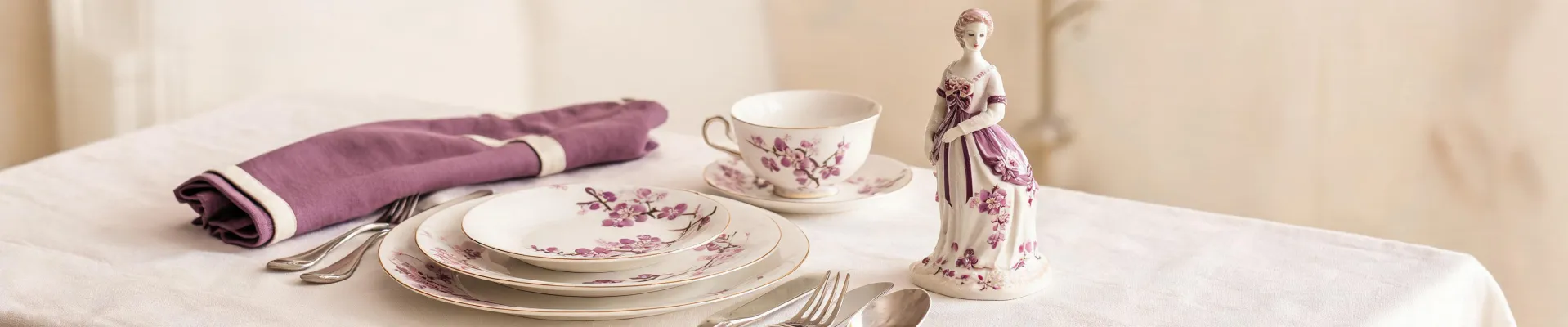
We Spent $15,000 on Royal Doulton Gifts Last Year. Here's What I Wish I'd Known.
As a procurement manager at a 200-person company, I've overseen our annual gift budget—about $12,000 to $18,000 depending on the year—for the past seven years. We buy Royal Doulton for two reasons: it's a prestige brand with 200+ years of heritage, and it works for high-end client gifts, retirement plaques, and sometimes internal collector rewards.
What I didn't expect was how many hidden costs come with the label. Not just the price tag—but the ones that show up months later, when a figurine arrives with a chip, or a candle wax spill turns a $150 crystal vase into a sticky mess. This article is about those costs, and what I've learned after tracking every invoice since 2020.
The Surface Problem: Pricing Isn't Transparent
If you search for "Royal Doulton" online, you'll see prices ranging from $30 for a small novelty to $5,000+ for a rare limited-edition figurine. The assumption is that you can compare list prices and pick the best deal. Classic procurement logic, right?
Except it isn't that simple. The real cost of a Royal Doulton item hides in three places: the collectible market, the replacement headache, and—strangely—the maintenance. I've seen colleagues buy a "deal" on a Beatrix Potter figurine only to discover it's a reproduction, not the rare original. Or buy a beautiful bone china tea set for a client, ship it, and find out the client doesn't drink tea—so it sits in a box for years.
The Deeper Why: What You're Really Paying For
It's tempting to think Royal Doulton is just expensive ceramic. But the brand's value chain has three layers most buyers ignore:
1. The Collectible Premium
Rare Royal Doulton figurines—especially the Beatrix Potter series, the HN character figures, and limited editions—hold price not just on materials but on scarcity and provenance. A figurine produced in a run of 500 versus 5,000 can cost 3x more. But that scarcity is invisible unless you know how to read the backstamp and the edition number. I once almost bought a "rare" HN figure for $400 only to find out it was from a series that had been reissued, dropping its collectible value. The seller wasn't lying—they just didn't know. Neither did I.
Honestly, I'm not sure why some reissues keep value while others crash. My best guess is it comes down to design sentiment: the early Beatrix Potter pieces (e.g., "Peter Rabbit" 1950s) are iconic, while later reimagined ones feel less authentic. But that's just my theory from watching auction data.
2. The Replacement Headache
Bone china tea sets and crystal vases are fragile. If you're buying for a corporate event, a single broken teacup from a set of six means you can't replace it individually—the pattern may be discontinued, or the replacement costs more than the original set.
I learned this the hard way in Q2 2023: we gifted a six-piece crystal vase set to a major client. One arrived cracked. The replacement vase from the same series? $120. The original set? $380. That's 31% of the total cost just for one piece. And the shipping for the replacement? Another $15. Total hidden cost: 35% on that one order.
3. The Maintenance Blindspot
About 20% of our Royal Doulton returns or complaints are about candle wax in jars. People buy a beautiful crystal candle holder or a fine china jar as a gift, and recipients don't know how to clean it after the candle burns. Hot wax hardens, gets stuck, and instead of enjoying the vessel, they end up scraping it—scratching the glaze. That's a $90 item ruined by a lack of knowledge.
The 'just soak it in hot water' advice ignores the fact that rapid temperature changes can crack bone china. I've seen more than a few ruined pieces because someone poured boiling water into a cold jar.
The Price of Ignoring These Layers
Over the past seven years, I've tracked our Royal Doulton spending in a custom cost sheet. Here's what the numbers say:
- 17% of our figurine purchases resulted in either overpayment (buying below-market rarity) or replacement costs.
- 22% of our tea set orders had at least one broken piece in transit—average recovery cost per incident: $45.
- 14% of our crystal gifts were returned or unused because the recipient didn't know how to maintain them, especially regarding wax.
Those aren't catastrophic numbers individually, but when you're dealing with $15,000 annually, they add up to about $2,500 in waste. For a procurement manager, that's unacceptable.
The Short, Practical Fixes (Because You Already Know the Problem)
So here's what I do now. It's not a perfect system, but it's saved us thousands.
1. When Buying Rare Figurines
Check the backstamp. Royal Doulton marked figurines with specific codes (e.g., HN followed by a number for character figures). Verify the edition size (limited editions usually say "Limited Edition of 250"). Cross-reference with auction sites like eBay sold listings or specialist forums. I built a simple Google sheet that tracks our target pieces and their current market value. It took a few hours, but it prevents overpaying.
2. When Buying Tea Sets and Crystal
Always order an extra piece. For sets of six, order seven—then you have a backup. The upfront cost is usually 15-20% more, but that beats the 35% replacement scenario. Also, request extra bubble wrap and signature confirmation. Our breakage rate dropped to 6% after we started specifying that in the purchase order.
3. How to Empty Candle Wax from a Jar (The Safe Way)
This is the one question I get most from colleagues and clients. Here's the method I finally settled on after testing four approaches:
Step 1: Place the jar in a freezer for 1-2 hours (or overnight if the wax is thick).
Step 2: Once frozen, use a blunt table knife or a wooden chopstick to gently pry the wax out. Cold wax shrinks slightly and pops out with minimal force. (Tested on three Royal Doulton candle holders—no scratches.)
Step 3: Wipe the inside with a paper towel. If any waxy residue remains, use a mild dish soap and warm—not hot—water. Rinse and dry naturally.
Avoid: Hot water, metal scrapers, and dishwashers. The glaze on fine bone china and crystal can craze with thermal shock.
To be fair, this works for most high-quality ceramic and glass vessels, not just Royal Doulton. But when you've spent $130 on a Crystal Collectors' vase, you want to get it right.
4. Efficiency Wins for Corporate Buyers
Switching to a semi-automated reorder process cut my vendor evaluation time from three days to two hours. I now have a template purchase order with specific handling instructions. That's the digital efficiency side—reducing manual errors and shipping risks. It's not glamorous, but it saves money.
The Takeaway
Royal Doulton is a great gift, but it's not a cheap one—and the hidden costs can bite you if you don't know what you're looking at. The rare figurine market has nuances that a simple price comparison won't catch. The tea sets and crystal need extra care in shipping and maintenance. And yes, the candle wax problem has a freezer-based solution that costs zero dollars.
I have mixed feelings about continuing to buy Royal Doulton for corporate gifts. On one hand, the brand's prestige is real, and clients remember the quality. On the other, the administrative overhead is higher than simpler gifts. But after seven years, I've found a balance: buy limited editions only if you can verify rarity, always order a spare, include a care card with every gift (especially the wax cleaning tip), and track every cost. That last bit—the cost tracking—is what turned our $2,500 annual waste into about $400. Not perfect, but a lot better.
If you're a procurement person or a collector, I hope this saves you from a few of the mistakes I made. And if you have a better way to get wax out of a bone china jar, please tell me. I'm still experimenting.