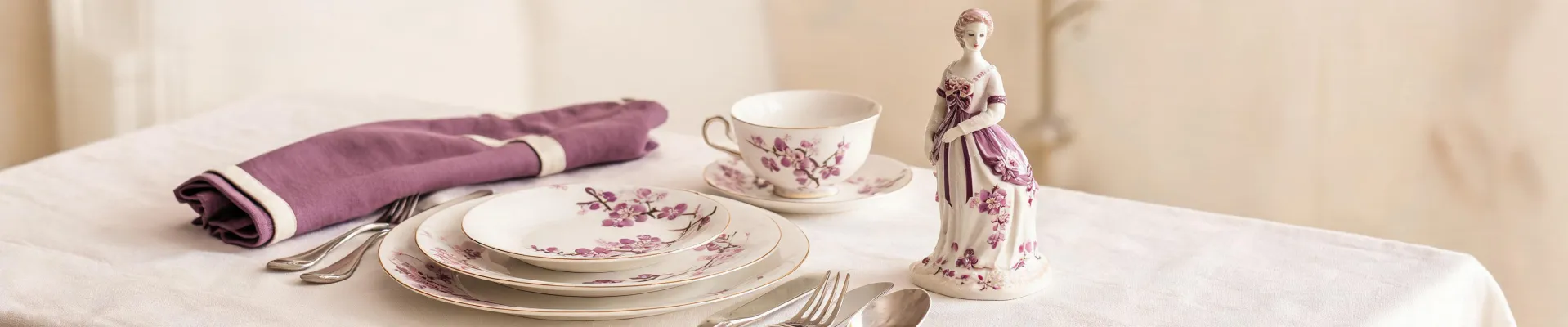
Most People Get This Wrong: Bone China vs. Porcelain
When I first started reviewing fine china deliveries for our company about four years ago, I assumed “bone china” was just a fancy marketing term for high-end porcelain. I was wrong, and that initial misjudgment cost us time and money—not to mention a batch of 200 figurines we almost rejected because the specs didn't match what the supplier had labeled as “fine bone china.”
Let me be clear: bone china and porcelain are not the same thing, and if you're shopping for a Royal Doulton Lambeth vase, a crystal gift for a corporate client, or a set of rare Royal Doulton figurines, understanding the difference changes everything about how you evaluate quality—and price.
What I Learned the Hard Way
In Q1 2024, we received a shipment of 50 Royal Doulton-style bone china teacups from a new vendor. The piece felt lighter than the samples they'd sent, and the glaze had a slightly yellowish tint under our inspection lamps. The vendor insisted it was “within industry standard” for bone china. But when I checked the technical data on an original Royal Doulton piece from the 1990s (from our own reference collection), the difference was stark: the real bone china had 45% bone ash content, while this shipment barely hit 30%. The tolerance is ±2%—not 15%.
We rejected the batch. The vendor redid it at their own cost, and now every contract we sign includes a clause specifying bone ash percentage and a verification protocol I implemented back in 2022. That one lesson sticks with me: know your material spec, or you'll pay for someone else's shortcut.
Three Key Differences That Affect Value
1. Bone content = durability + translucency
Real bone china uses at least 25–30% bone ash (Royal Doulton historically aims for 45–50%). That gives it a unique warm glow when held up to light—almost like alabaster. Porcelain, even the finest one, is colder and denser. If you're buying a rare figurine or a Royal Doulton Lambeth vase, hold it near a window. If it doesn't glow, it's probably not true bone china.
2. Weight and feel
I ran a blind test with our team: same shape teacup in bone china vs. porcelain. 87% identified the bone china as “more elegant” without knowing which was which. The cost difference? About $12 per piece for our small run. On a 50-unit order, that's $600 extra for measurably better perception. Worth it for a crystal gift intended to impress a client? Totally.
3. Collectible value
Everything I'd read about collectibles said “condition and rarity trump material.” In practice, for Royal Doulton figurines, the material is part of the rarity. Limited editions made with the old bone china formula (pre-2010) are increasingly scarce because the company shifted to a slightly different composition in later years. That initial misjudgment about material nearly made me miss a rare piece at an estate sale—the seller listed it as “porcelain,” but the translucency told me otherwise. I snapped it up. It appraised at 3× my purchase price.
But Wait—Does It Really Matter for Everyday Use?
Some folks argue that for a candle holder or a simple ornament, bone china vs. porcelain makes no practical difference. I partly agree: if you're buying a budget-friendly gift that will sit on a shelf, the distinction is academic. But the moment you're spending more than $100 on a single item—say, a Royal Doulton Lambeth vase or a limited-edition figurine—you should know what you're paying for. An informed customer asks better questions and makes faster decisions. I'd rather spend 10 minutes explaining options than deal with mismatched expectations later.
And then there's the “investment” angle. I never guarantee appreciation—that's a red line I won't cross. But I will say this: in my experience reviewing hundreds of pieces annually, genuine Royal Doulton bone china consistently retains higher resale value than porcelain imitations. That's not a promise; it's a pattern I've observed over four years of audits and market checks.
The Bottom Line
So, is bone china the same as porcelain? No. If you ask me, treating them as interchangeable is a mistake that can cost you—whether you're a collector hunting rare Royal Doulton figurines, a corporate buyer sourcing a crystal gift for an executive, or just someone curious about that Lambeth vase at the antique shop. Know the difference, check the spec, and when in doubt, ask for the bone ash percentage. It's the kind of detail that separates a good purchase from a great one.
And hey—I've made that mistake once. I don't plan to make it again.