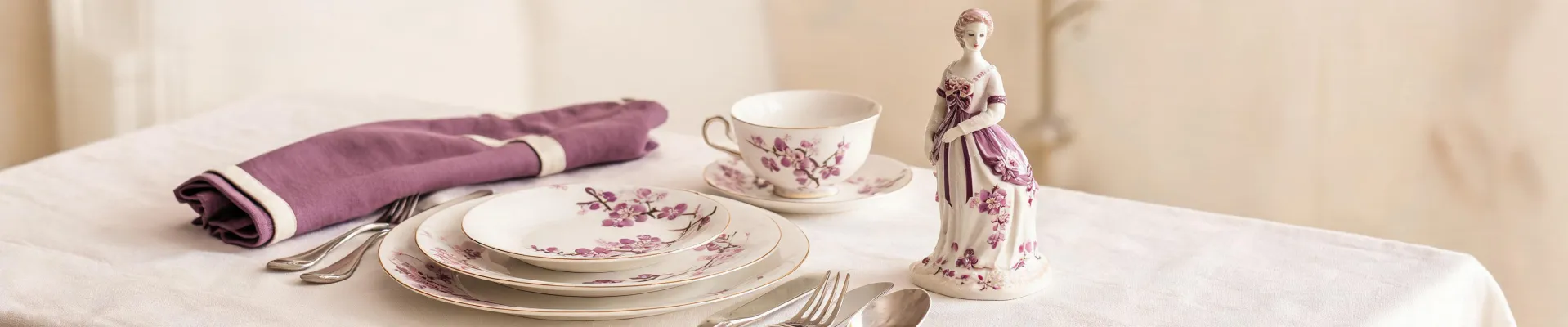
A December Box From a Supplier
Last December, our biggest supplier sent a client gift that did not come from our usual gift catalogue. Inside the packing peanuts was a Royal Doulton holiday figurine. I want to say it was a robin perched on a snowball, but don't quote me on the exact model name. It had a painted backstamp on the base: 'Royal Doulton, Made in England.' Below that was a small HN number.
I manage corporate gifting and procurement for a 40-person marketing firm. Our client appreciation budget is about $18,000 a year, and I've tracked every order in a cost spreadsheet for the past six years. This gift wasn't in my spreadsheet because we didn't buy it. I should add that our supplier had sent us a branded power bank the year before, so the Royal Doulton piece was a clear upgrade. It felt significant. Oh, and we had no formal gift-logging process at the time, which is how the same supplier later sent us a second gift in June and nobody remembered the first one. That was a small red flag.
What I Learned From Searching 'Most Valuable Rare Royal Doulton Figurines'
That evening, I did what anyone in my position would do. I searched for 'most valuable rare royal doulton figurines.' The results were full of auction listings and collector guides. Some rare pieces command serious money. The phrase 'fine bone china' appeared everywhere, and the box had said Royal Doulton English Fine Bone China, so I started reading about the material itself.
Royal Doulton's brand story dates to 1815, and the company has produced fine bone china pieces since the early 20th century. Bone china is prized because it is strong and translucent, but the value of a collectible figurine depends on more than the material. Condition matters. Original box matters. Provenance matters. A figurine can be gorgeous and still sell for very little if the market is full of it.
I couldn't find the exact model online in five minutes. (Should mention: I didn't have the HN number with me at that point, so I was searching by 'white robin figurine,' which produced hundreds of unrelated results.) The search did make one thing clear: I was not going to buy a rare Royal Doulton figurine on a procurement manager's discretionary budget.
Why I Made a Diamond Painting Instead
I still wanted to keep the visual detail of the holiday figurine without spending collector money. My daughter had a diamond painting kit on the kitchen table. Diamond painting is essentially mosaic-by-numbers: you stick tiny resin drills onto a sticky canvas, following a chart. I had previously dismissed it as craft-kit clutter. At $15 for a kit, it looked like a no-brainer compared to a $350 rare piece. With a frame, sealer, and shipping, the total cost was probably $40—still far less. But I didn't account for my own time, which is exactly the kind of hidden cost I complain about at work. Time turned out to be the bigger line item.
The more I thought about it, the more I wanted to try it. So I searched for how to make your own diamond painting design, and the tutorials I opened said the same thing: start with a clear image, convert it to a grid pattern, pick DMC colors, and test a small section. I decided to make a diamond painting of that robin figurine. The finished object would not be fine bone china, of course. It would be a framed ornament inspired by the gift.
How to Make Your Own Diamond Painting Design (the way I did it)
If you want a custom diamond painting of a ceramic figurine, here's the process I landed on. It was not my first try.
- Use a straight-on reference photo. Take the photo at eye level with soft, even light. I used window light and a piece of white paper behind the figurine to reduce shadow. The first photo I tried had my coffee mug in the background. That didn't work.
- Simplify the image before you pixelate it. A 3D figurine has small glints that need to become shapes, not colors. I cropped the robin, removed the background, and reduced the palette to four or five DMC colors. At least, that's been my experience with a small canvas. If I tried to keep every glaze highlight, the diamond painting would look like a blur from a few feet away.
- Match the canvas size to the level of detail. I started with a 30x40 cm canvas, which was too big for the image resolution I had created. Honestly, the first version looked like a watercolor painting left in the rain. The robin's eye disappeared. I should have started with a 10x15 cm sample to test the chart. That's the process gap in my story: I didn't have a verification step before committing to a larger canvas.
- Render or hand-draw a pattern, then test. Some people use paid diamond painting software. I used a free pixelation tool and cleaned up the pattern manually on a tablet. If I remember correctly, the whole chart had around 28 colors, which was more than I expected. The test patch took less than an hour and probably saved me from wasting an entire canvas. The second time I decided I didn't need the test, I finally added a permanent rule: sample first. Should have done that after the first one.
- Seal and frame it like an ornament. Diamond paintings can shed drills if they're handled roughly. I pressed the drills down with a soft brush, sealed the finished piece with a water-based sealer, and put it in a shadow box. It now hangs near my desk every December.
The Result and the Real Lesson
The finished diamond painting doesn't look exactly like the Royal Doulton holiday figurine. It looks like a bright, pixelated cousin of it. The original still sits in a glass cabinet at the office. The ornament hangs at my house. Both are valuable, but not in the same way.
It took me about six weeks and two failed attempts to understand that the point wasn't to copy the figurine. The point was to make something with my own hands that reminded me of the original. I think that's true of a lot of gifting decisions, too. A procurement person can chase the lowest quoted price and miss the total cost. Or they can pay more for something meaningful and still get value. The phrase 'most valuable rare Royal Doulton figurines' is a market phrase. It doesn't capture the value of a gift that makes a supplier relationship feel human.
Per Royal Doulton's official care guidance, which I checked in January 2025, fine bone china should be hand-washed in warm soapy water and should not be soaked or put in a dishwasher. That care instruction applies to the figurine at the office. The diamond painting just needs a dry cloth. The gap between those two care routines is a good metaphor. Different objects have different requirements, and the best choice depends on the context. What was best practice in the past—buy the branded collectible and keep it pristine—isn't the only option in 2025. A handmade custom ornament can carry just as much thought.
So, if you're wondering about Royal Doulton's most valuable pieces, keep researching. Rarity matters. Condition matters. Demand matters. But if you're wondering whether to make your own diamond painting design from a figurine you love, I'd say try the small version first. It's cheaper than a rare collector's piece, and it turns an ornament into a memory.