Why I Started Comparing Royal Doulton Figurine Lines
Last November, I sat in a packing station surrounded by eight Royal Doulton boxes and a spreadsheet I'd built to track every penny of our client gift budget. Six hours in, I asked myself the same question twice: did we order the right pieces this year?
For context, I'm the office administrator for a 45-person company. I manage all the corporate gift buying—roughly $18,000 a year across six vendors. I report to both operations and finance, which means I justify every purchase twice. I've sent everything from crystal vases to desk ornaments, but Royal Doulton has been our default since 2022. The real question is never which brand. It's which Royal Doulton line to choose: the Henry VIII & Six Wives figurines or the Pretty Lady figurines.
Both are beautiful. Both qualify as classic china figurine workmanship. But they're not interchangeable. Here's how the two lines compare across the four dimensions that matter when you're buying at scale: collectibility, client perception, sourcing difficulty, and budget.
Collectibility: Closed Set vs Open Series
The Henry VIII set is a fixed story. Seven pieces: Henry, Catherine of Aragon, Anne Boleyn, Jane Seymour, Anne of Cleves, Catherine Howard, and Catherine Parr. When you own all seven, you have the complete set. That sense of completion is powerful.
It's also a trap.
Gift a single Henry piece and you've started a collection that will feel unfinished until the other six are found. For a corporate buyer, "unfinished" is another word for "I get follow-up calls." One client asked us for six months whether we could source the remaining wives. We couldn't.
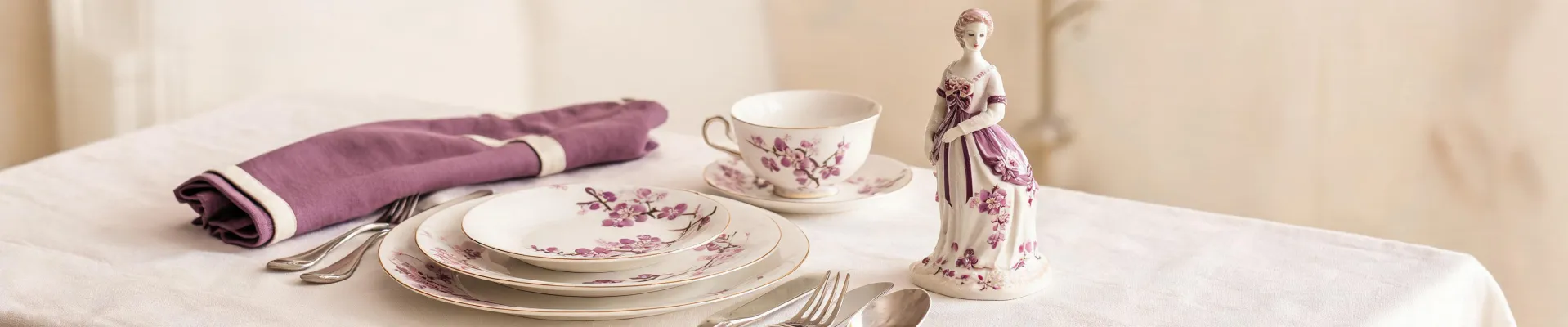
The Pretty Lady series is the opposite. Since Leslie Harradine began designing the line in the 1930s, Royal Doulton has produced dozens of different lady figurines with individual names and stories—"Sweet Anne," "Lynn," "Priscilla," and many more. Collect one or twenty; each piece stands alone just fine.
Here's my conclusion after two gifting seasons: the Henry VIII set has stronger narrative pull for serious collectors, but the Pretty Lady line is easier to gift without creating an obligation. A solo member of a royal court feels like a to-do. A lone Pretty Lady is a complete thought.
Client Perception: The Moment the Box Opens
I've managed enough corporate gifts to say this bluntly: the first thing a client touches when they open your box is your reputation. The feel of the packaging, the weight of the figurine, the name on the backstamp—it all lands somewhere in their impression of you.
Henry VIII figurines say heritage. They say your company values history and the long view. We sent a Catherine Parr piece to a retired bank executive who keeps a shelf of Tudor biographies in his office. He called me—not email, called—and talked about the figurine's details for fifteen minutes. That kind of reaction doesn't happen with a branded water bottle.
Pretty Lady figurines say charm. They say your company notices beauty and wants to be part of someone's daily surroundings. These figurines end up on desks, not in display cabinets. They feel personal.
Now for the part I didn't expect.
In our 2023 gift season, we sent eight Henry VIII pieces and fourteen Pretty Lady figurines. The thank-you note ratio was roughly equal. But the tone kept diverging. Henry gifts got polite, formal acknowledgements. Pretty Lady gifts got warm, personal replies—two included photos of the figurine on someone's desk. One office manager told me hers reminded her of the china figurine her grandmother kept on the mantle.
Does that mean the Pretty Lady is the better gift? Not necessarily. It depends on whether you want formal respect or personal warmth. Both are valuable currencies; they buy different kinds of relationships.
Sourcing: Where Your Time Gets Eaten
Let me clear up a misconception: it's tempting to think you can just compare prices on an auction site and call sourcing done. But identical-looking figurines from different production eras can differ significantly in value. A 1930s Pretty Lady with an original backstamp is not the same item as a 1990s reissue, even when they photograph the same.
Henry VIII pieces are retired. You're buying on the secondary market, which means you verify HN numbers, inspect base markings, check glaze consistency, and prepare for condition surprises. In 2024, we sourced three Catherine Parr pieces from dealers in three different countries. Two were solid. The third arrived with a hairline crack that wasn't visible in the listing photos.
The Pretty Lady line ran longer and in larger numbers, so supply is healthier. More options, better negotiating room, fewer heart-stopping checkout moments.
I have mixed feelings about buying on marketplaces. On one hand, they're the only way to source retired figures, and some of our best finds came from small dealers who clearly loved their inventory. On the other, condition claims vary, return policies shift, and shipping practices range from museum-grade to newspaper-and-tape.
Shipping is its own expense. According to USPS (usps.com), a First-Class Mail large envelope starts at $1.50 per ounce as of January 2025—but a boxed figurine needs a parcel, padding, insurance, and signature confirmation. We budget $18-35 per figurine for shipping and insurance. That's real money, and it's why the "cheaper" figurine sometimes isn't cheaper by the time it lands on a client's desk.
Budget: The Real Numbers
Since I live in spreadsheets, let's talk figures. These are approximate dealer and marketplace prices from our 2024-2025 buying cycle (January 2025); actual prices vary by condition, era, backstamp, and location. Use them as planning ranges, not quotes:
- Pretty Lady figurines, common designs in good condition: $80-180
- Pretty Lady figurines, rare designs or early backstamps: $200-600
- Henry VIII & Six Wives figurines, individual pieces: $120-300
- Complete Henry VIII & Six Wives set, matched era: $1,200-2,800
And before you ask about resale value—I don't recommend buying figurines as investments. Per FTC guidelines (ftc.gov), collectible marketing can't promise appreciation, and that's a sensible warning. We buy these to make memories, not returns.
Still, I have regrets. I still kick myself about a "Darling" figurine at a London antiques fair in 2021. Pristine condition, one of the more sought-after Pretty Lady designs, and the dealer wanted £85. I thought I'd negotiate later. I kinda knew as I walked away that I'd never see that price again—and sure enough, it surfaced on a seller's site last year, listed at £240.
How to Choose: Our Working Rule
After two years of buying both lines, here's the rule our team landed on:
Choose the Royal Doulton Henry VIII & Six Wives figurines when you need a substantial, story-driven gift. It works for milestone anniversaries, retirement gifts for heritage-minded clients, or any moment when you want the gift to feel carefully considered.
Choose the Royal Doulton Pretty Lady figurines when you're gifting a team, sending multiple items at once, or selecting a gift for someone whose warmth you want to acknowledge. They source faster, ship easier, and—at least in our experience—generate noticeably warmer responses.
And if you're trying to preserve a memory for someone special: yes, plenty of guides explain how to preserve flowers for scrapbooking. I've searched that phrase myself. But a china figurine is the low-maintenance version of that instinct. No pressing, no archival glue, no wilting. It simply stays beautiful.
Bottom Line
Quality is a direct reflection of the respect you have for the person receiving it. That doesn't mean spending the most money. It means choosing deliberately enough that your client feels the thought behind the piece.
Whether that's a royal court narrative or a graceful lady on a shelf, the right figurine outlasts every email you'll ever send. It sits on a desk and represents you daily.
That's the ROI.