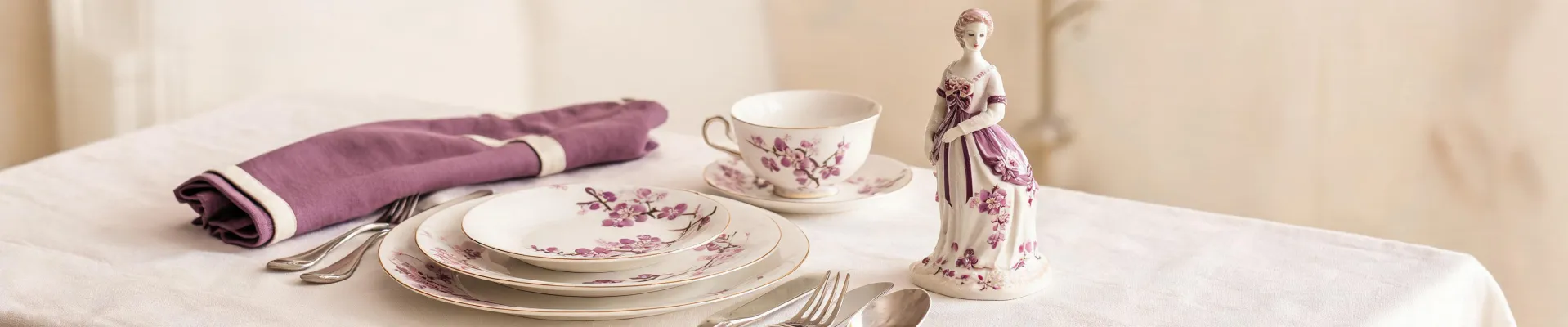
When I took over purchasing in 2020, the first "tricky request" I got was a retirement gift for the CFO. Someone suggested a Royal Doulton figurine. And the first search I typed was something like royal doulton dog figurines value because… well, I wanted to know if I was buying something meaningful or something that would end up in a box in someone's attic.
That search taught me something useful: there isn't a single "worth it" number for Royal Doulton pieces, crystal gifts, or even nativity sets. It depends on what you're trying to do. Are you buying a gift for a person, an item for a collection, or a piece for an office shelf? Those three situations lead to completely different buying decisions.
Let me walk you through how I handle each one.
Three ways to think about value
Basically, I split every buying request into three buckets:
- Gift purchases – something for a specific person or occasion
- Collector purchases – something for someone (or a client) who wants rarity and history
- Office/decoration purchases – something durable that looks good in a shared room
What works for one bucket can be a mistake in another. Here's what I mean.
Scenario A — Buying a gift: the "wow" factor matters more than provenance
If you've ever had to buy a present for a boss, a client, or a retiring coworker, you know the pressure: it has to feel thoughtful, but it also has to be useful or beautiful enough that they don't roll their eyes. That's where crystal gifts and Royal Doulton pieces shine.
A crystal suncatcher is one of my go-to gifts for modest budgets. It catches light, works in almost any window, and doesn't scream "corporate gift" the way a branded notebook does. I've sent suncatchers to at least three different office managers and every single one mentioned it months later. (This was before 2023, at least — the trend may have shifted, but the sentiment hasn't.)
The same logic applies to a Royal Doulton figurine. You don't need to find a rare piece. Buy something that looks great in their home. The brand's 200-year history carries its own weight.
A question I get every December: how many pieces in a nativity set should you get for a corporate holiday display? The honest answer: it depends on the collection. Traditional sets run anywhere from 7 to 13 pieces — the 13-piece set typically includes the Holy Family, three wise men, shepherds, and a few animals. Royal Doulton's own nativity scenes varied by year; some had 9 figures, others had 11. If you're buying on behalf of a company, I'd aim for a complete set rather than a partial one. A partial nativity set looks broken, and you won't be able to source a matching piece later. (Learned that one the hard way during the 2022 holiday season.)
One caution I'll pass along from my compliance side: per FTC advertising guidelines (ftc.gov), if you're writing a gift card or product description, don't call something "limited edition" or "rare" unless you can back it up. It's an honest reminder that works for gifts and marketing alike: authenticity is the part people remember.
Scenario B — Buying for a collector: value is a whole different game
Now, if a client or a friend actually collects Royal Doulton, the game changes completely. The question "what is this worth?" has a much more specific answer — but it takes work to find it.
I don't have hard data on every Royal Doulton dog figurine price from the last twenty years, but based on watching auction sites, antique mall listings, and collector forums since about 2019, my sense is that prices for royal doulton dog figurines value range widely — from $40 for a common model in worn condition to several hundred for a well-documented piece in mint condition. The HN number (the painted pattern code on the base) matters a lot. So does the size and the shape of the dog.
Here's what most people don't realize: the royal doulton vases catalogue is just as rabbit-holey as the figurines. Vases were produced in hundreds of patterns — tiny floral hand-painted ones, Art Deco geometric designs, and tall bone china statement pieces. On the secondhand market, some of those vases sell for less than the cost of a modern dinner plate. Others are surprisingly expensive because a particular shape was only produced for a few years. You can't guess by looking at them. You have to check the mark on the bottom.
A quick primer on Royal Doulton marks:
- 1880s–1900s: impressed or printed marks with the company name
- 1901 onwards: the crown and "Royal Doulton" mark
- 1920s–1950s: the round "Royal Doulton" backstamp with a lion and crown
- Modern pieces: cleaner, simpler logos
If you're serious about a vintage piece, ask for a clear photo of the mark and the HN number. Then cross-check it with a collector reference (there are good online databases, including some run by Royal Doulton collectors' clubs). Never assume that "old-looking" equals "old." I've seen "antique" Royal Doulton vases that were actually produced in the 1980s — the style was just retro. People assume the wear on the base means it must be a century old. What they don't see is that the same mark style was used for decades.
One honest boundary I've learned the hard way: a Royal Doulton figurine is a wonderful collectible, not a guaranteed investment. I recommend it for collectors who enjoy the research and the craftsmanship, but if you're buying purely to resell at a profit, that's not a game I'd recommend. The market is too unpredictable.
Scenario C — Furnishing an office: durability beats provenance
If you're outfitting your own office or a reception area, the calculus shifts again. Office pieces get moved, cleaned, knocked, and occasionally borrowed by coworkers. I don't buy rare or expensive vintage pieces for office use. It's not worth the panic when the cleaner nudges a vase into a windowsill and it comes down.
For office display, I'd take a modern Royal Doulton vase or figurine over a vintage one every time. They're made from fine bone china that's still produced in the UK, they're easy to find, and if one breaks, you can usually order a replacement. In this scenario, a crystal suncatcher is also a great choice for the window of a conference room — it creates a nice light effect and doesn't fill a shelf with another thing people have to dust.
You might be surprised by this, but I'd actually avoid a crystal gift that is too delicate in a true office setting. If you have a shared space with busy foot traffic, a crystal bowl or vase is going to get knocked around. It's prettier than it is practical. Keep the delicate crystal for someone's home office, not the break room.
How to figure out which scenario you're in
If you're not sure whether you're buying a gift, a collectible, or an office piece, ask yourself three questions:
- Who is on the receiving end? A specific person? Go with the gift logic.
- Are you searching for a specific mark or HN number? If yes, you're in collector territory.
- Does it need to survive a Thursday afternoon without constant supervision? Then it's office decor — buy for durability, not rarity.
Still on the fence? My rule of thumb is: default to the gift scenario. It has the most emotional payoff and the least risk. You get the "wow" from the brand name and the craftsmanship, and you don't have to worry about whether you overpaid for a rare pattern. Just keep the receipt, because you might end up needing it for expense reporting. (Speaking from experience — our accounting team rejected a purchase without a proper invoice once, and I ate the cost. Now I verify that before any sizable order.)
One last practical note about shipping: if you're sending any Royal Doulton item or crystal gift, check USPS guidelines at usps.com for packing fragile items. Proper packing — a sturdy box, bubble wrap, and enough cushioning that the object doesn't slide around — is the difference between opening a box and opening a box of broken ceramic pieces. Honestly, I double-box everything that's irreplaceable.
Royal Doulton has been making things people keep for a lifetime for over 200 years. Whether you're buying a figurine as a gift, a vase for a collection, or a crystal suncatcher for a bright window, the value isn't just in the material. It's in the person who receives it and the story it tells. That part, at least, doesn't change.