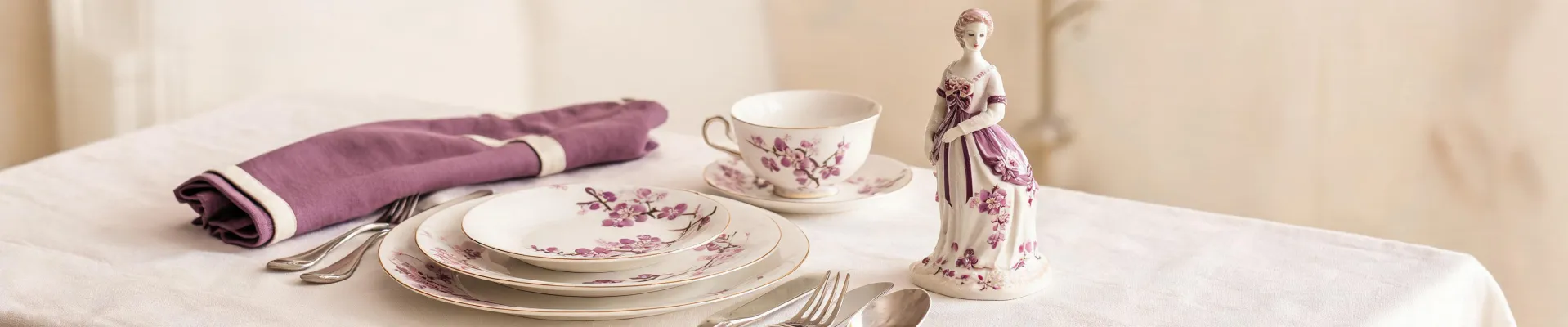
Let me start with a confession: I inspect ceramics for a living, and the question I get asked most is “is this a good buy?” It’s the wrong question. The right question is “what am I buying it for?” A Royal Doulton figurine for your mantel is a different purchase from a Royal Doulton figurine bought to complete a collection, and both are different from a Royal Doulton nativity set ordered as a corporate gift. There is no single checklist that fits all three.
Full disclosure: my experience is based on inspecting roughly 2,000 incoming pieces a year for a UK-based giftware importer. Maybe 1,800, I’d have to check the system. If you’re buying one piece at a car boot sale, you’re in a different lane, and some of my advice won’t transfer.
There Is No One “Right” Way to Collect Royal Doulton
The first thing you’ll find when you search is a list of Royal Doulton figurines. Ignore half of it. People ask for the list as if it were a single PDF. It isn’t. The range runs into thousands of models, and the official Royal Doulton website focuses on what’s in production now. According to Royal Doulton (royaldoulton.com), the figurines are still made through a multi-stage handcrafted process, but the company does not maintain a single public database of every historical model.
The closest thing to a list of Royal Doulton figurines is the HN numbering system. The HN prefix comes from an early Doulton artist’s name, and collectors use it to identify a specific model. If you see an HN number in an auction listing, that number means more than the name on the label. Cross-check it with a printed reference book, not a forum.
Before I get into scenarios, one warning: if you’re shopping for current Royal Doulton collectibles, don’t assume everything is a collector item. A limited-edition figurine is a collectible. A bone china teaset is tableware. The word “collectible” has become a marketing label, and as a quality inspector, I care less about the label and more about what you’re actually getting.
Scenario 1: You’re Buying One Piece for Yourself or as a Gift
If you’re buying your first Royal Doulton figurine, buy current, buy from a dealer who can tell you the pattern name, and keep the box. You do not need to chase a “vintage” piece unless you genuinely know how to verify it. A modern figurine from an authorised retailer is a safe start.
If the piece is for a dinnerware set or a teaset, match the pattern code exactly. Royal Doulton has produced different patterns under the same name over the years, so the backstamp matters as much as the name. Put your new plate next to the existing one before you buy. If the white isn’t the same white, you’ll notice it forever.
For a Royal Doulton vase or ornament, check the base and the rim—chips there are easy to miss. For gifts, inspect before wrapping. A nativity set has many small pieces, and I’ve seen sets arrive with one shepherd in the wrong pose or, once, two identical kings with no third king. The box showed three different poses. The supplier replaced it, but only because I photographed the box and the figurines side by side. A small Royal Doulton votive candle holder is another easy one: check the inner rim for chips. The first time someone lights the votive candle, the flame shows every flaw.
If your budget is closer to zero, don’t force a figurine purchase. A vintage Royal Doulton advertising plate or a museum-store art print gives you the brand aesthetic for a fraction of the price. And if you’re wondering where to buy affordable wall art prints, the answer is not a random poster site. Look at independent print shops, museum stores, and auction listings for vintage brochures. Ask the print resolution before you pay: commercial print standard is 300 DPI at final size, and a 2,000-pixel-wide image is only about 6.7 inches wide at that resolution.
Scenario 2: You’re Chasing Vintage Figurines and Rare Backstamps
This is a different game. The first mistake is buying by name alone. The second is buying by age alone. Condition beats age. A 1920s figurine with visible restoration won’t hold value like a 1970s figurine with no chips and a clean glaze.
Restoration is a dangerous word. I have seen restored pieces where the photos looked flawless and the touch-up was visibly duller than the original glaze under normal light. If you’re spending serious money, ask for a condition report that mentions restoration under normal light and ultraviolet light. If a seller won’t do that, walk away.
Get to know the HN number system. That’s the closest thing to a reliable list of Royal Doulton figurines. The HN number identifies the model, and the backstamp helps with the era. The printed research by Louise Irvine and Valerie Baynton is still the standard reference, even if it’s no longer easy to find.
Honestly, I don’t know why some models appreciate and others don’t. My best guess: scarcity, condition, and current taste matter more than age. A rare figurine that nobody wants to display is less valuable than a pretty one everyone puts on a shelf. The surprise isn’t that fakes exist. It’s how good a modern reproduction with a copied backstamp can be—good enough to fool most casual buyers. If a deal feels too good to be true, it’s usually a damaged piece, a restored piece, or a reproduction.
Do not buy Royal Doulton as an investment. If it appreciates, lovely. If it doesn’t, you still own a beautifully made object. That’s the only safe way to approach any collectible. And one regret from my own buying: I still kick myself for not buying two discontinued models at a trade fair in 2019. I told myself I’d see them again, and I haven’t. With discontinued pieces, “I’ll wait” is a dangerous plan.
Scenario 3: You’re Ordering Royal Doulton for a Business
If you’re buying for a hotel, a corporate gift programme, or an office, stop thinking like a collector and start thinking like a procurement inspector. The brand story doesn’t help when a box of 50 nativity sets arrives with one broken sheep and two scratched plates.
I review every batch that goes through our warehouse: about 50 to 80 orders a week. In 2024, I rejected roughly 4% of first deliveries from one supplier because the glaze finish was inconsistent. The vendor claimed it was “within industry standard.” Our contract now says that visible glaze variation across matching pieces is rejectable. That sounds obvious, but you’d be surprised how often it’s left vague.
Ask “what’s not included?” before you ask “what’s the price?”
On a large order, that’s where the pain lives: crating, palletising, courier insurance, delivery to the right floor, and replacement pieces for transit breakage. I once watched a $4,800 quote turn into $6,100 after those line items. The vendor wasn’t dishonest; the quote just didn’t say what it didn’t include. A vendor who lists all fees in the proposal, even if the total looks higher, usually costs less in the end.
For bone china dinnerware and teaset orders, check the glaze consistency. Put two plates from different boxes side by side. If the whites don’t match, query the whole batch. For figurines, check the same HN number across a batch: the painting should be consistent. Slight variation in hand-painting is normal and part of the charm. A visibly crooked eye on one figurine in a set of twenty is not.
Do not treat small seasonal pieces as afterthoughts. A nativity set can arrive with the lamb broken. A votive candle holder can have a hidden chip in the inner rim, and the first time a votive candle is lit, the flame will expose it. On a corporate order, your name is on the gift tag, not the factory’s. I’ve rejected boxes because the packing was one layer of tissue paper. Glazed ceramic is unforgiving in transit.
How to Tell Which Scenario You’re In
Here’s a rough self-test, based on my experience with a few thousand incoming pieces. If you’re in a different corner of the market, your mileage may vary.
- If you’re buying one piece for a shelf or a gift, buy current and keep the receipt. Don’t hunt for a “rare” piece unless you actually know how to verify it.
- If you’re buying vintage to complete a collection, use condition as the first filter, then HN number and backstamp. Get a written condition report.
- If you’re buying for a business, ask what’s not included before you compare prices, and check the delivery specification before you sign.
It sounds like common sense, but the hard part is admitting that the same brand can be three completely different products. A Royal Doulton figurine is a decorative piece, a collector target, or an inventory line. You have to know which one you’re buying before you spend money. If someone guarantees it will go up in value, walk away. In my years of inspecting these pieces, the only guarantee I’ve found is that beautiful objects are easier to live with than bad deals.
At least, that’s been my experience with Royal Doulton and similar premium ceramics. If you’re buying one rare figurine with a heavy restoration budget, some of this won’t apply. But the habit of asking “what am I actually buying?” never goes out of style.